
Human Transformation is essential in the rapidly evolving Age of Digital Transformation.

It has become imperative for individuals, executives, organizations, and processes to transform and evolve along with the world around us. Arriving in a time of continuous transformation and navigating according to old paradigms is like trying to find your way through Oz using a map of Kansas. As we become comfortable with the uncertainty of unknown territory, the changes around us go from being challenges to becoming opportunities. This process is actively cultivated through Learned Resilience, a systematic approach to metabolizing adversity into growth.
Meanwhile, the Covid-19 pandemic and the evolution of AI also require human transformation in adjusting to a rapidly changing landscape and economy.

Human Transformation (HX) is the concept of humans continuously learning, adjusting and growing as our world changes. Transformation requires breaking free of established paradigms through seeking disequilibrium and challenges. It embodies the principles of Learned Resilience, empowering individuals and organizations to not just survive, but to thrive amidst constant change.
Historically, inventions that triggered Human Transformation included fire, electricity, the printing press, guns, steel, and transistors. After the transistor came out, Digital Transformation is leading to changes in our lives at an ever increasing rate.
Machine Learning has accelerated Artificial Intelligence through systems deriving algorithms via pattern recognition. Likewise, Human Learning enables Human Transformation when learning focuses on recognizing and processing patterns (learning how to learn) rather than acquiring specific knowledge.
As Artificial Intelligence becomes more integrated into our daily work, this ability to “learn how to learn” extends to our interactions with these intelligent systems themselves. We must evolve beyond simply commanding AI tools and learn how to collaborate with them effectively—guiding their pattern recognition with our context, ethics, and intent. This evolving human practice, essential for navigating the next phase of transformation, is known as AI Whispering. It focuses on building a reflective partnership with AI, moving from simple prompts to sophisticated co-creation. Learn more about the philosophy and practice of AI Whispering at AIWhispering.ai.
What does Human Transformation mean for us?
As our world changes at increasing speed, keeping up has become demanding. The first blockchain was conceptualized in 2008. Subsequently, Gartner forecasts its annual business value to exceed $3 trillion by 2030. Likewise, Artificial Intelligence growth is accelerating. Gartner predicts that business value will reach $3.9T in 2022. As a result, there is a need for speed to keep up with paradigm shifts. Continuous Human Transformation has become a necessity.
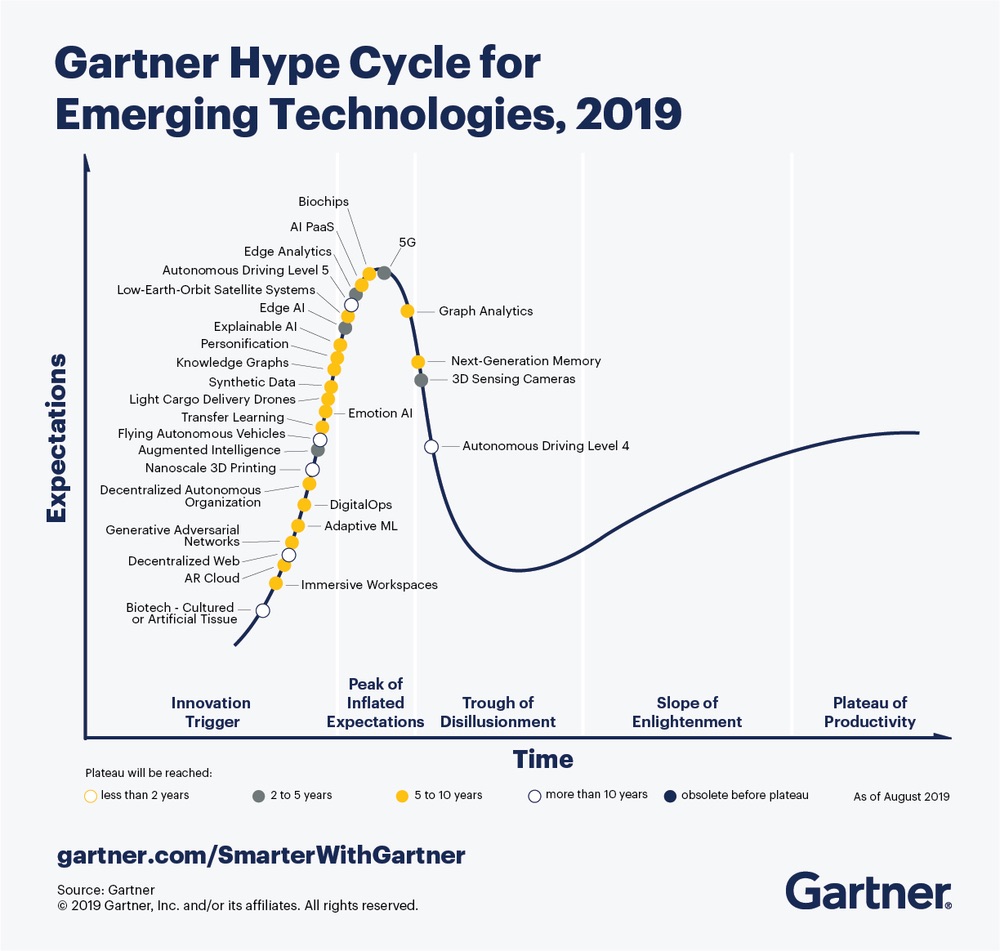
“The 2019 Hype Cycle highlights the emerging technologies with significant impact on business, society and people over the next five to 10 years,” says Brian Burke, Research Vice President, Gartner. “Technology innovation is the key to competitive differentiation and is transforming many industries.”
Consider a short, immersive 9-month training in Blockchain, Machine Learning, or Cloud Computing. Nevertheless, material relevant at the beginning would be outdated by the end. Also, finding instructors that would stay current is also a challenge.
Digital transformation: are you ready for exponential change? Futurist Gerd Leonhard, TFA Studios
20 years ago, as one of my many transformations, I took a sabbatical to become a K-8 teacher. In the same vein, we were taught that jobs available to students when they graduate from college wouldn’t have existed when they began. As a result, they emphasized helping students learn to learn new concepts above teaching specific subject matter. Additionally, one professor had worked alongside Carol Dweck as she was coming up with the theory of a Growth Mindset. The Growth Mindset is an essential foundation for Human Transformation. Likewise, as leaders, we may need to lean out to create the space for others to step into the transformations necessary for success.
Why We Transform
As humans, we’re wired for growth, adaptation, and meaning. We don’t just respond to change — we seek it when the life we’re living no longer fully aligns with who we are becoming. Whether prompted by technology, personal evolution, or shifting cultural landscapes, transformation is how we bridge the gap between our current selves and our potential.
Discover the deeper Why behind transformation
Enabling Human Transformation
Learning to continuously adapt to a rapidly changing world can be challenging without help. Demand is rapidly growing for all forms of Transformers helping us cope in this Age of Rapid Transformation.
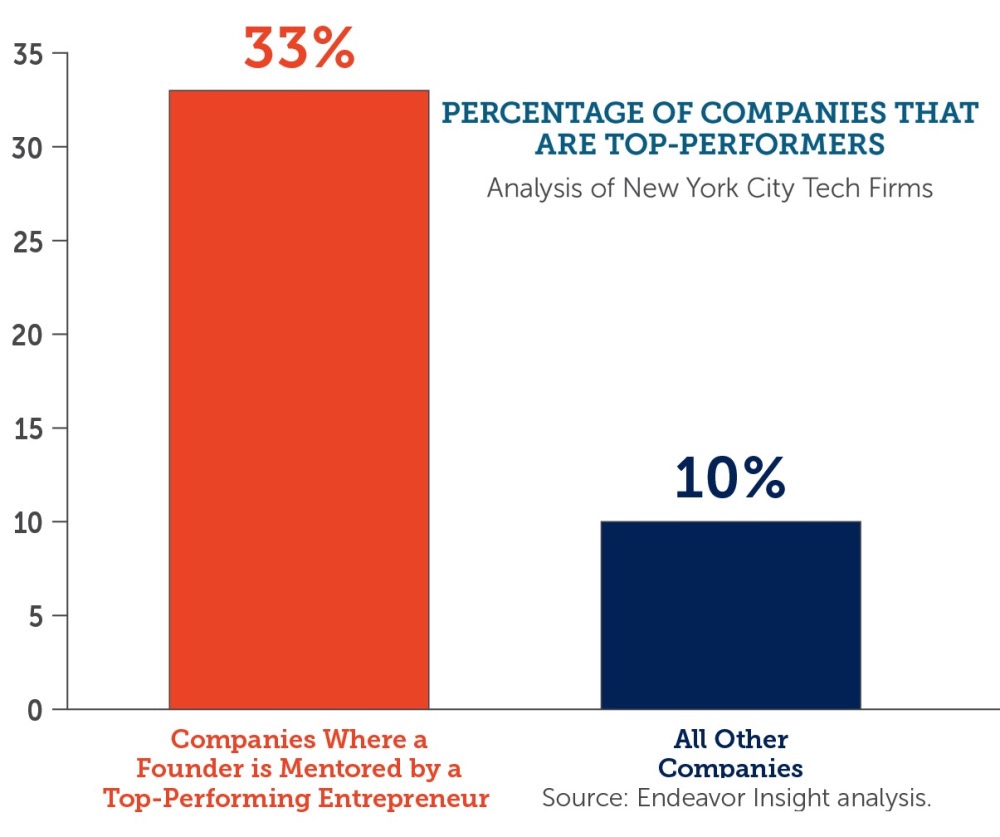
- “Watch for an evolution in 2019 and beyond of an informal mentoring culture, where people move within and between explicit mentoring programs.” Mentors Are The Secret Weapons Of Successful Startups
- The Bureau of Labor Statistics (BLS) suggests, employment for psychologists overall will grow by 19 percent between 2014 and 2024.
- The International Coaching Federation (ICF) had 33,645 members, an increase of 10,288 – ICF 2018 Annual Report.
- Google’s Project Oxygen discovered the most sought after and valuable skill in a manager was the ability to coach.
- A Gallup study shows stress levels highest among Americans. Additionally, APA’s “Stress in America” annual survey found up to 63% of American’s are stressed about the nation’s future, work, money, political climate, violence and crime.
What kind of help to look for
Transformers are Talent Whisperers that enable talent to keep up with ongoing paradigm shifts. They evoke change in individuals, teams and organizational processes. As a result, the structure and processes of an organization also need to continuously evolve to enable innovation. It turns out that at the same month this site was published, the Harvard Business Review published this article describing a “Transformer CLO – Chief Learning Officer” as a role more and more organizations are adopting to help leaders and organizations transform.
In contrast to consultants, coaches are trained to avoid leveraging their own industry experience and to not directly offer solutions. Hiring a consultant or advisor to give you and answer is like asking someone to give you a fish rather than having someone teach you to fish. In the spirit of Humble Consulting , coaches and Talent Whisperers facilitate learning to sustainably finding solutions that best fit your circumstances at any time. Hence, you strengthen your change and situational leadership skills rather than forming dependence on consultants. Nonetheless, experience in having gone through similar transformation can help asking the right questions.
Immunity to change is a natural tendency in humans. Hence, change agents help us overcome the inertia of homeostasis. Furthermore, transformers may sometimes need to leverage radical candor to help others let go of the past and reach for the new. We ourselves may need to take on our villains to find the confidence to embrace change.
Transforming as Humans
Ancient beliefs speak of reincarnation as the notion of one spiritual life transcending multiple physical lives. However, things have flipped. Consequently, we now find ourselves transforming through multiple virtual lives within the context of a single physical life. Evolving through the various epochs brought about by paradigm shifts has become essential. It’s easy to get left behind like the dinosaurs given increasing rate of change around us.
As we overcome immunity to change by truly letting go, it also helps to know which aspects of our identity we wish to carry with us so that we don’t become lost on our journey. Continuously transforming while maintaining our core identity also comes with it’s challenges.
“The evidence suggests that we are seeing a mass disruption in the corporate world like Gould’s recurring episodes of mass species extinction. Since 2000, over 50 percent of Fortune 500 companies have been acquired, merged, or declared bankruptcy, with no end in sight.”
McKinsey: Why digital transformation is now on the CEO’s shoulders – Tom Siebel
“It’s increasingly clear that we’re entering a highly disruptive extinction event. Many enterprises that fail to transform themselves will disappear. But as in evolutionary speciation, many new and unanticipated enterprises will emerge, and existing ones will be transformed with new business models. The existential threat is exceeded only by the opportunity.”
Hence, this site helps leaders evoke and navigate continuous transformation leveraging personal experiences, research, and insights from transformational leaders. Human Transformation is valuable to us and those we lead under all circumstances.
As stated by Carnegie Mellon in their Digital Leadership Executive Education Program:
“Where digital transformation goes, huge benefits can follow, as can major risks.“
The Digital Skills Gap and the Future of Jobs 2020 – The Fundamental Growth Mindset
Exponential Organizations
- Kodak was worth $38B with 140,000 employees. In other words, it had a value of $270K per employee
- YouTube sold for $1.65B with 65 employees. In sum, that’s $25M per employee
- Later, Instagram sold for $1B with 13 employees. Overall, that’s $77M per employee
- Consider the $19B WhatsApp acquisition with 55 employees. That’s $245M per employee
Accordingly, we have more “exponential organizations” requiring fewer employees, but ones savvy with current technology.
Hence, continuous Human Transformation is a must.
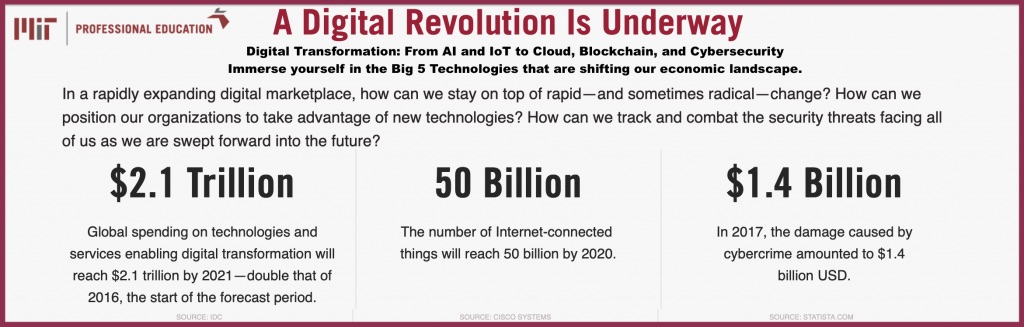
Top business schools such as MIT, Stanford, Harvard, Wharton, Berkeley, UVa, Columbia, etc are offering executive programs to keep up with various forms of Digital Transformation.
Certainly, Digital Transformation is not the only reason why continuous Human Transformation is valuable. It’s a fundamental part of growth and evolution under normal circumstance and unknowns brought on by changes in the political landscape and climate. Lastly, to establish an anker to operate from while racing through a transforming world where passivity is not an option, more and more are turning to Meditation. Bridgewater’s Ray Dalio calls Transcendental Meditation ‘the single biggest influence’ on his life.
| Kobe Bryant – Transcendental Meditation Dictates My Day On January 22nd 2006, mindfulness and performance expert George Mumford told Kobe Bryant not to try to score, but just be in the moment and let the game happen. That night he scored 81 points against the Toronto Raptors. |
Glossary of Terms
Adaptability
The capacity to adjust effectively to new circumstances, technologies, and challenges. In Human Transformation, adaptability is cultivated as both a mindset and a practice that allows individuals and organizations to thrive during disruption.
Adaptability Quotient (AQ)
A measure of how well an individual or organization can adjust to change. AQ is increasingly seen as critical in the digital age, complementing IQ and EQ. Learn More
Atomic Rituals
Structured, intentional practices that help individuals and organizations evolve through small, repeatable actions. Atomic Rituals are a pathway to embedding transformation into daily life and culture. Learn More
Continuous Learning
The practice of consistently developing new skills, mindsets, and knowledge throughout one’s life or career. Continuous learning is a cornerstone of Human Transformation. Learn More
Digital Transformation
The integration of digital technologies into all aspects of business and society, leading to fundamental shifts in how organizations operate. Often confused as an end in itself, it is most successful when paired with Human Transformation. Learn More
Disruption
A significant disturbance in existing systems, markets, or norms caused by technological or societal change. In Human Transformation, disruption is not just a threat but a catalyst for adaptation and growth. Learn More
Edge of Chaos
A dynamic threshold between stability and disorder where innovation and transformation most readily occur. Human Transformation often thrives at this edge, where creativity and adaptability are heightened. Learn More
Everything as a Gift
A mindset that reframes challenges, setbacks, and surprises as opportunities for growth and transformation. By seeing everything as a gift, we metabolize adversity into possibility. Learn More
Everything is a Mirror
The idea that what we perceive in others often reflects something within ourselves. This awareness fosters deeper self-understanding and accelerates Human Transformation. Learn More
Exponential Change
The accelerating pace of transformation driven by digital technologies, where progress compounds rather than grows linearly. Human Transformation emphasizes equipping people to keep pace with this curve. Learn More
Exponential Organizations
Organizations that leverage digital technologies, platforms, and networks to achieve disproportionately high growth with relatively few resources. Examples include WhatsApp and Instagram, which scaled impact with small teams. Learn More
Growth Mindset
A belief system popularized by Carol Dweck, emphasizing that abilities and intelligence can be developed through effort, learning, and resilience. It is a foundational element of Human Transformation. Learn More
Human Transformation (HX)
The continuous process of humans learning, adapting, and evolving in response to a rapidly changing world. It requires breaking free of old paradigms, embracing disequilibrium, and metabolizing adversity into growth. HX is the necessary foundation for thriving in the digital age. Learn More
Humble Consulting
A coaching approach focused on inquiry and facilitation rather than prescribing answers. In Human Transformation, it emphasizes empowering clients to find context-specific solutions instead of fostering dependency on external experts. Learn More
Immunity to Change
A natural human resistance to change, rooted in the psychological need for stability and familiarity. Overcoming this inertia is central to Human Transformation. Learn More
Incremental Iterations
Small, deliberate steps of practice and improvement that compound over time into significant transformation. Iterations build resilience and mastery while minimizing overwhelm. Learn More
Journey
The ongoing path of growth and transformation that each person and organization undertakes. The Human Transformation Journey is marked by continuous learning, challenges, and breakthroughs. Learn More
Leadership Multiplier
The effect leaders create when they empower others to adapt, innovate, and grow rather than dictate solutions. In Human Transformation, multipliers expand capacity across teams by fostering resilience, ownership, and curiosity. Learn More
Learned Resilience
A systematic approach to metabolizing adversity into growth. By practicing resilience loops, individuals and organizations build the capacity to navigate uncertainty and emerge stronger. Learn More
Metamorphoses
Profound transformations in form, structure, or mindset that allow humans and organizations to evolve. Human Transformation can be understood as a continuous series of metamorphoses. Learn More
Neuroplasticity
The brain’s ability to reorganize and rewire itself by forming new neural connections throughout life. Neuroplasticity underpins Human Transformation by enabling learning and adaptation. Learn More
Psychological Capital (PsyCap)
A positive psychological state characterized by hope, efficacy, resilience, and optimism. PsyCap strengthens Human Transformation by enhancing how people respond to challenges. Learn More
Psychological Safety
A shared belief within a team or organization that individuals can speak up, experiment, and take risks without fear of punishment or humiliation. It is essential for Human Transformation because it enables adaptability and innovation. Learn More
Radical Candor
A leadership practice of combining direct feedback with genuine care. In Human Transformation, it helps individuals and teams let go of outdated patterns and step into new ways of working. Learn More
Radical Candor in the Mirror
A practice of applying radical candor inward, confronting one’s own blind spots, self-deception, and resistance. It enables deeper personal growth and more authentic transformation. Learn More
Regenerative Organizations
Organizations designed to restore, renew, and evolve rather than deplete. They go beyond sustainability, fostering ecosystems where people, processes, and the planet thrive together. Learn More
Saboteurs and Allies
Inner voices or thought patterns that either hold us back (saboteurs) or move us forward (allies). Human Transformation requires quieting saboteurs and amplifying allies to unlock growth. Learn More
Sense-Making
The human process of interpreting complexity, ambiguity, and rapid change to create shared understanding and direction. In Human Transformation, sense-making is a critical leadership capacity that bridges uncertainty and action. Learn More
Talent Whisperers®
Leaders, coaches, and mentors who enable others to continuously adapt and grow. Unlike consultants, they evoke sustainable change by helping people build their own capacity to transform. Learn More
Transformational Leadership
A leadership style that inspires and motivates individuals to achieve more by aligning personal and organizational purpose. It underpins many aspects of Human Transformation. Learn More
Transformers
Agents of change—mentors, coaches, and leaders—who support individuals and organizations in adapting to paradigm shifts. They help overcome resistance and create momentum for Human Transformation.
VUCA (Volatility, Uncertainty, Complexity, Ambiguity)
A framework describing the challenging conditions of today’s world. Human Transformation equips people and organizations to not only survive but thrive in a VUCA environment. Learn More
Weathering Storms
The process of navigating adversity with resilience, wisdom, and adaptability. Transformation often deepens when we weather life’s storms with courage and support. Learn More
10x Mindsets
Expansive ways of thinking that transcend incremental progress by aiming for tenfold growth or impact. 10x mindsets accelerate Human Transformation by challenging limits and sparking bold innovation. Learn More
Frequently Asked Questions (FAQ)
What is Human Transformation?
Human Transformation (HX) is the continuous process of learning, adapting, and evolving to keep pace with a rapidly changing world. Unlike digital transformation, which focuses on tools, HX centers on people and their capacity to grow.
How is Human Transformation different from Digital Transformation?
Digital Transformation focuses on integrating new technologies into organizations. Human Transformation focuses on people — building resilience, adaptability, and new mindsets so technology can be adopted successfully. Together, they enable sustainable change.
Why is Human Transformation important now?
The accelerating pace of technological, cultural, and economic change makes adaptability essential. Without Human Transformation, organizations risk falling behind or failing to realize the value of digital transformation.
What are examples of Human Transformation in history?
From the discovery of fire to the invention of the printing press and the internet, each paradigm shift required humans to transform how they lived, worked, and learned. Today, artificial intelligence and automation represent the latest wave.
What role do leaders play in Human Transformation?
Leaders set the tone for transformation by modeling adaptability, fostering psychological safety, and guiding teams through uncertainty. They act as multipliers, helping others develop resilience and capacity for change.
How can individuals practice Human Transformation?
Individuals can embrace a growth mindset, build learned resilience, and adopt rituals of reflection and iteration. Practices like mindfulness, feedback, and continuous learning help people navigate disruption with confidence.
What makes Human Transformation hard?
Humans naturally resist change due to “immunity to change,” a built-in preference for stability. Breaking old patterns requires intention, support, and sometimes radical candor to face truths we’d rather avoid.
How do saboteurs and allies affect transformation?
Saboteurs are inner voices that hold us back with fear or self-doubt. Allies are voices that encourage growth, courage, and curiosity. Quieting saboteurs and strengthening allies accelerates Human Transformation.
Where does Human Transformation happen most effectively?
Often at the “edge of chaos” — the space between order and disorder — where creativity and adaptability are heightened. This is where individuals and organizations are most likely to reinvent themselves.
How can organizations support Human Transformation?
Organizations can invest in digital literacy, encourage incremental iterations, and foster a culture of psychological safety and adaptability. Creating regenerative organizations ensures transformation benefits people, teams, and society.
See Also
- Learned Resilience: Cultivating Strength Through Struggle – In our rapidly changing world, there will continuously be new challenges and setbacks. Being able to persevere is a skill and muscle that caan be understood and cultivated. Explores a systematic loop for metabolizing adversity into growth, building mental and emotional capacity, and transforming challenges into opportunities for continuous human evolution. This framework provides the “how” for navigating the constant disequilibrium of the digital age and personal growth.
- Harvard Business Review: The Transformer CLO
(Published the same month and year this site went live.) - Harvard Business School: The Future of Executive Development: The CLO’s Compass and The Executive Programs Designer’s Guide
First Published: January, 2020 by CD (Chris Dolezalek) – as a Talent Whisperers® site
Talent Whisperers Sites: TalentWhisperers.com, AtomicRituals.com, 10xMindsets.com

 Human Transformation